

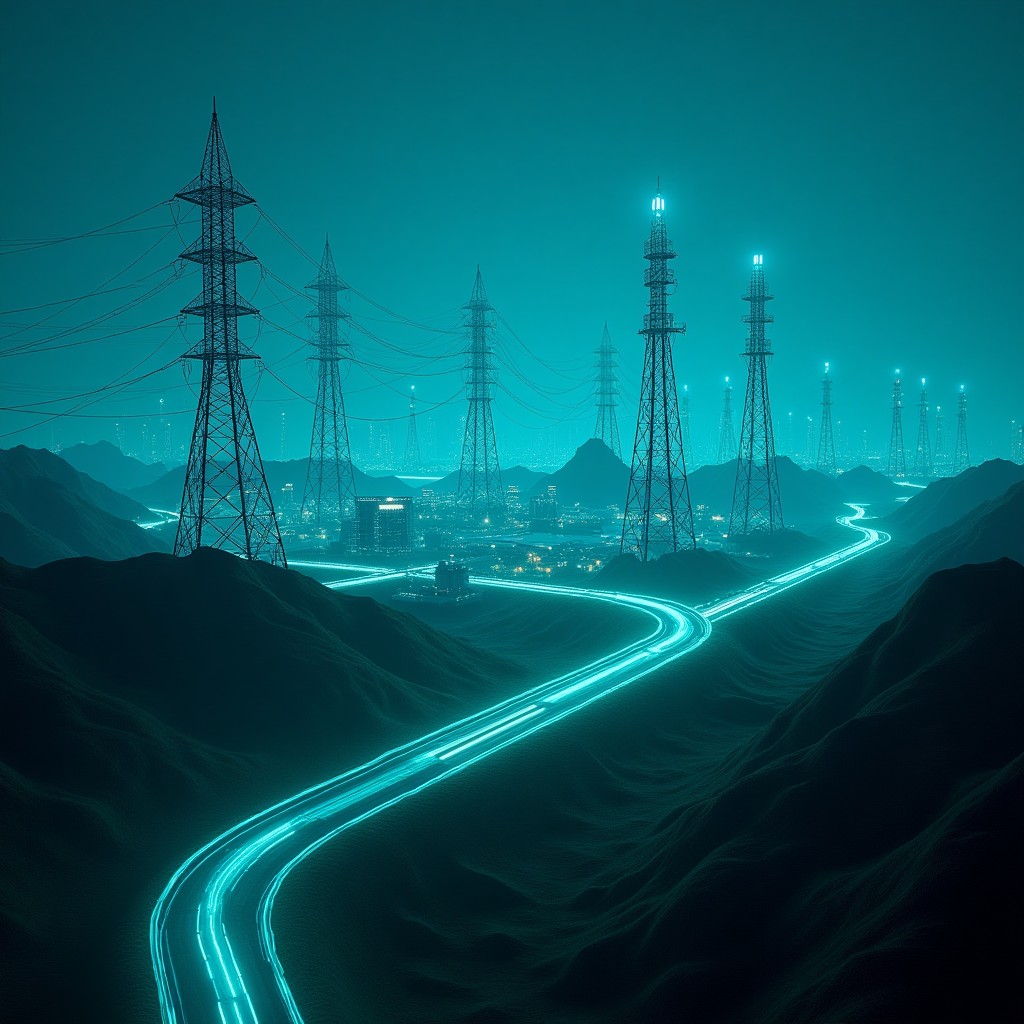
AI valuation is currently a collective hallucination. The market continues to bid up software models that have yet to show a dollar of productivity gain for 80% of enterprises, while the real war—the war for physical sovereignty—is being fought in the natural gas fields and power grids of the American Midwest.
The era of “Models as Value” is dead. We have entered the era of Megawatt Sovereignty.
The Stargate Mirage
The headlines would have you believe that OpenAI’s $500 billion “Stargate” project—a partnership with Oracle and SoftBank—is the architectural blueprint for the next century of computing. In reality, it is a desperate PR stunt for a venture model that has run out of runway.
Reports from February 2026 confirm that the project is stalling due to “partner friction.” SoftBank and Oracle aren’t just squabbling over office space; they are fighting over who has ultimate control of the hardware. When you are spending $500 billion, you aren’t just buying chips; you are attempting to build a sovereign state. The friction stems from a simple realization: in a world where compute is the only currency, Sam Altman’s vision of a unified global AI infrastructure is incompatible with the selfish incentives of the providers who actually own the land and the power.
Circular Silicon: The New Debt Trap
While Stargate stalls, Meta and AMD are playing a far more dangerous game. Meta recently signed a deal for 6 gigawatts of custom Instinct GPUs from AMD. But look closer at the financing. This is “Chips-for-Stock” territory.
We are seeing a rise in Circular Financing where chip makers trade silicon for equity or use GPUs as debt collateral (recent reports show cloud startups using AMD chips as collateral for $300 million loans). This is the subprime mortgage crisis of the AI age. If the demand for AI inference doesn’t materialize—and with 80% of companies reporting zero productivity gains, that’s a very real possibility—the entire silicon ecosystem is built on a house of cards where the collateral is the very thing that is rapidly depreciating: last year’s GPUs.
The Power Sovereign and the Shadow Grid
The ultimate moat in 2026 isn’t a better transformer architecture; it’s a private natural gas plant. Tech giants are now building “Shadow Grids”—private power plants designed to sidestep strained public utilities.
Google and Amazon are no longer just software companies; they are utility providers. By building their own natural gas turbines, they are insulating themselves from the regulatory and physical constraints of a public grid that cannot keep up with the 6 GW demands of Meta-sized clusters. If you don’t own your megawatts, you don’t own your AI. The “Sovereign AI” of the future will be defined by who can generate their own electricity without asking for permission from a local utility board.
The Export Control Farce
DeepSeek’s recent success in training models on banned NVIDIA chips proves that digital borders are porous. Despite the US “staircase” of export controls, China’s flagship AI firm is reportedly running on the very silicon it was forbidden to touch.
This highlights the futility of trying to regulate a commodity that is as portable and fungible as high-end GPUs. The export controls haven’t stopped Chinese AI; they have simply created a high-margin black market that rewards the most efficient smugglers and the most creative engineers. DeepSeek’s ability to “distill” knowledge from Western models like Claude only further proves that the “moat” of a proprietary weights file is a myth.
The Strategic Implication: Megawatts over Models
The pivot is clear. The value in the AI stack has shifted entirely from the digital layer to the physical layer.
- Physicality is the Moat: If your AI strategy doesn’t involve a 10-year power purchase agreement or a private grid, you are just a tenant in someone else’s digital empire.
- The Efficiency Pivot: DeepSeek’s success shows that massive clusters aren’t the only way to win. The future belongs to those who can squeeze the most “intelligence-per-watt,” not just those who can buy the most H100s.
- The Valuation Reset: Expect a massive correction in the valuations of “model-first” companies. The only companies that will survive the infrastructure debt supercycle are those that own the physical assets—the power, the cooling, and the silicon.
The personal verdict? The AI bubble won’t burst because the tech fails. It will burst because we ran out of electricity to power the hallucination.